

“Our communities are complex,” Laura Pinney, executive director of Rogue Valley Mentoring, told us in an interview about RVM’s work. “They’re made up of many different cultures and people raised by different kinds of families. Because of that, the work has to be slow. It has to include deep listening and a willingness to be vulnerable and show courage.”
We agree. At the CareOregon Foundation, we know that relationships, trust building, listening to communities and following their leadership are all critical to effective grantmaking. We know that good work and good partnerships take time.
In 2025, two years after the Foundation was established, we made our first round of grants. The time was ripe. 2025 was a particularly tough year for nonprofits, with the federal administration making big funding cuts to social services, and the State of Oregon and many local governments facing budget shortfalls. Many communities were, and are still, hurting. While the CareOregon Foundation was still defining our grantmaking strategy, we wanted to get money out the door to communities who needed it.
In 2025, we made $1.2 million total in grants to 15 coalitions and organizations improving health in communities across Oregon. Our grantees included:
CareOregon, Inc. started the CareOregon Foundation as a separate but related sister organization. So, for this first round of grantmaking, we focused on the three key regions tied to the CareOregon, Inc. footprint, where we already had strong relationships:
The North Coast (Clatsop, Columbia, and Tillamook counties)
The Portland Metro area (Clackamas, Multnomah, and Washington counties)
Jackson County in Southern Oregon
We also chose to focus on four communities facing the brunt of federal cuts and attacks on their civil rights:
Immigrants and non-citizens
The LGBTQ+ community
Tribal/Indigenous communities
Young people
Additional priorities included:
Groups that were bridging differences by advancing belonging and countering othering and divisiveness
Justice-oriented efforts where communities disproportionately impacted by barriers and oppression built and applied resilience and power
Efforts that addressed the deeper causes of inequities and disparities, not only the symptoms and constraints of current systems
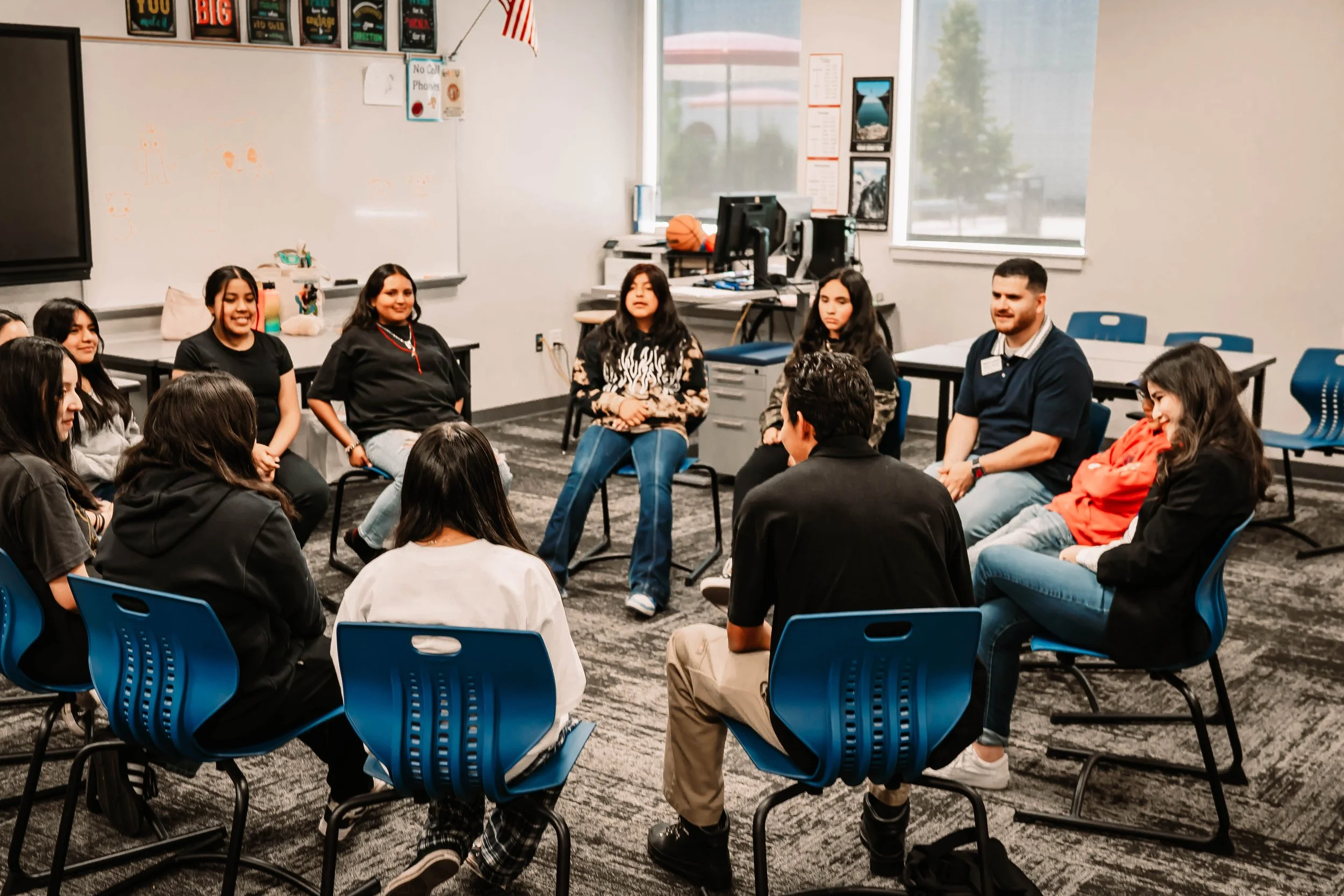
Rogue Valley Mentoring closely fit these criteria. Based in Jackson County, RVM supports young people, nine to 24-years-old, through group and individual mentorship. They do their best to pair youth with volunteer mentors who share their cultural background and similar life experiences.
RVM’s executive director, Laura Pinney, describes the impact of mentoring as a drop of rain in a lake: a caring relationship with one young person creates ripples that reach their family, school, community, and beyond. That relationship grows through deep listening, consistent support, and trust built over time. Mentors help youth recognize their strengths, pursue their own goals, and build the confidence to advocate for themselves and contribute to their communities.
Laura shared the story of one young woman who comes from a monolingual Spanish-speaking family. She’s been paired with the same mentor for the last six years (Consistency is everything!). At first, she was too nervous to venture beyond her home with her mentor. For weeks worth of sessions, they simply sat outside talking and building trust until she felt ready to take the next step. Eventually, this young woman joined RVM’s Youth Leadership Advisory Board, slowly building the confidence to speak in meetings, pushing through anxious stomachaches to participate. A year later, she went to Salem with a group of youth to meet and eat pizza with legislators, only getting up the nerve to ask a question at the very end. But just a couple months later, she presented on a youth panel. The audience included a senator and representative from Jackson County. And this same young person sat at a table with a microphone and gave a moving speech about ICE’s impacts on her community, and even took questions from the audience.
This is a success story. Rogue Valley Mentoring’s work reaches beyond grades or college plans. It’s about creating a community where youth feel they belong and recognize their own strengths, expanding their belief in what’s possible, and helping them get there.
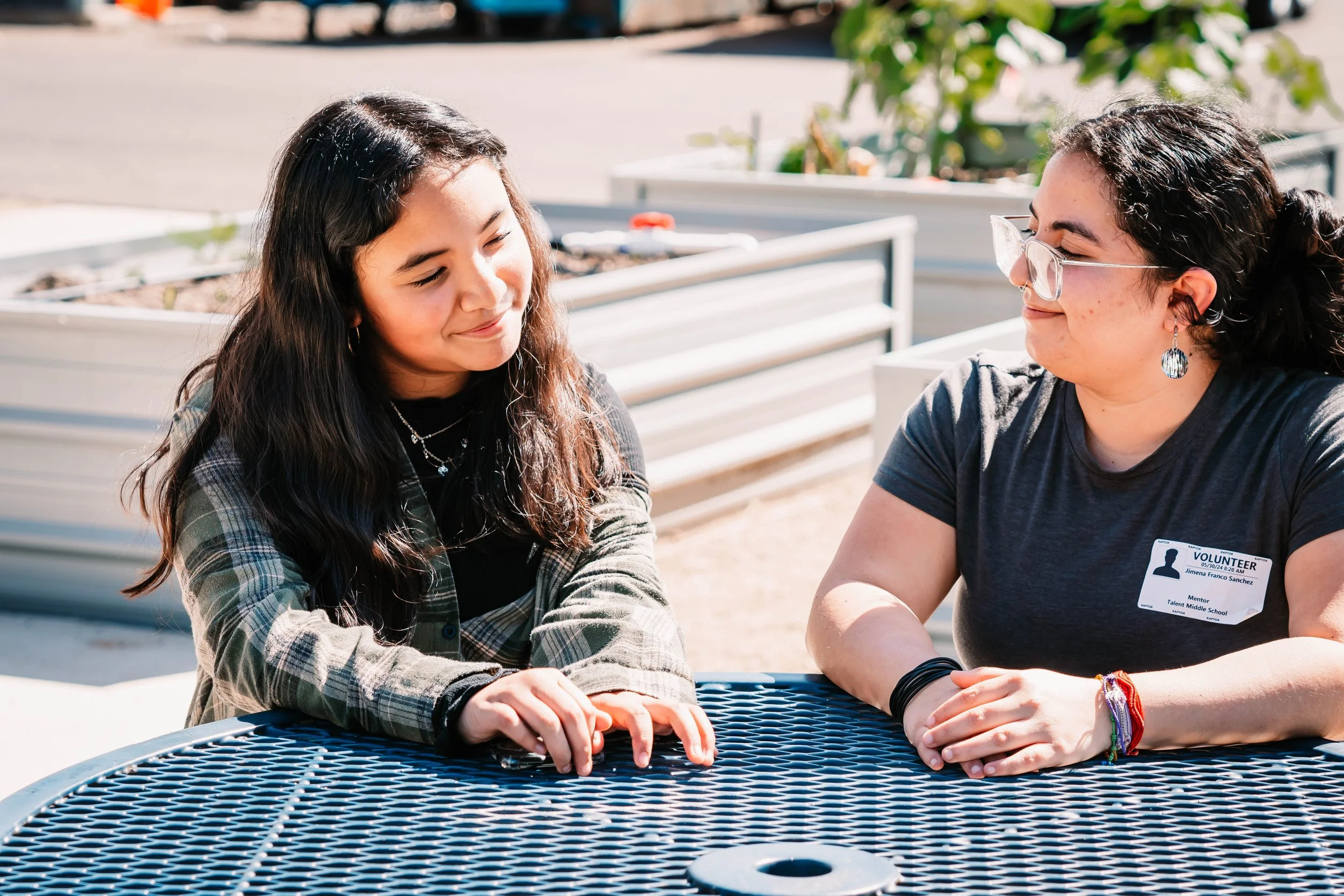
Laura says that the grant from CareOregon Foundation came at just the right time. In 2025, they were facing an organizational crisis, questioning whether they would have to shrink their services even as schools and families were asking for RVM’s support. RVM had previously received a federal grant that supported them to provide mentoring to an entire grade level—sixth graders at Talent Middle School. That funding had run out without an opportunity for renewal, and RVM was facing a funding cliff. As closing that gap began to feel impossible, Laura found herself wondering why the value so clear to the community was not translating into the funding needed to sustain the work. When CareOregon Foundation’s grant came through, it allowed them to carry on the program for another year, and it validated the good work they’re doing.
Unfortunately, for another one of our grantees, the onslaught of funding cuts and shifting federal priorities was overwhelming. The Oregon Latino Health Coalition, which for two decades had been instrumental in advocating for healthcare for all Oregonians, including undocumented community members, had to shut its doors in June 2026. While we feel this significant loss, it further motivates us to support community-led efforts to improve health in communities across the state.
This summer, we accepted applications for our second year of grantmaking. This time around the grants are larger and cover up to three years of general operating expenses. Our priorities are similar, with a special emphasis on youth and future generations. (Sneak peek: Rogue Valley Mentoring is still on our list of grantees.)
More to come! In the meantime, learn more about Rogue Valley Mentoring and consider making a gift to support their work. And read more about CareOregon Foundation’s approach to grantmaking.